
Ruby Diamond Theater (FSU)
A University Performance Venue Engineered for Clarity, Coordination, and Control
Location: Tallahassee, Florida
Market: Performing Arts
Solutions: Audio Systems, Control Systems, Systems Integration
Year: 2011–2012
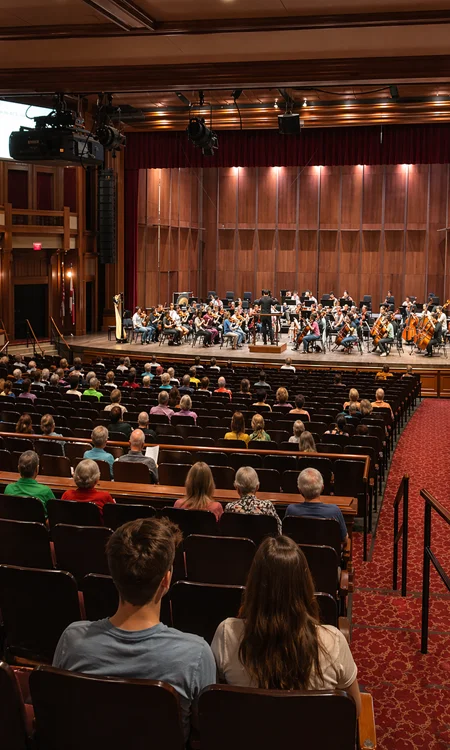
Ruby Diamond Theater at Florida State University operates as a teaching and performance venue where technical systems must support both formal productions and day-to-day academic use. Rather than optimizing for a single production style, the infrastructure needed to remain consistent across a wide range of events, users, and operational conditions.
The project focused on stabilizing and unifying core production systems, particularly audio reinforcement, communication, and control, so that the venue could function predictably regardless of who was operating it or what type of event was taking place.
Pro AVL approached the integration as a systems coordination exercise, developing an environment where signal flow, control logic, and communication pathways are aligned. The result is a technical foundation that reduces variability in performance while improving usability for both experienced technicians and student operators.
A Multi-Use Academic Theater with Variable Technical Demands
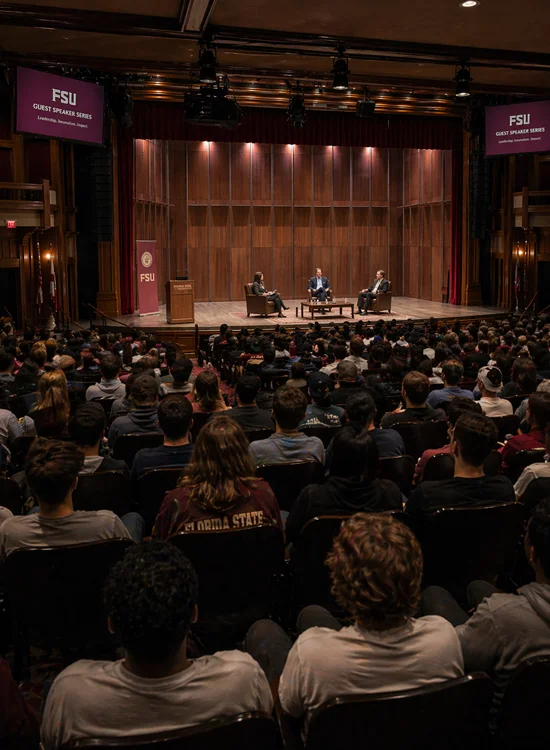
Unlike dedicated touring venues, Ruby Diamond Theater supports a rotating mix of performances, lectures, and university events. The technical infrastructure must adapt quickly without requiring extensive reconfiguration or specialized knowledge for each use.
The space operates with a combination of experienced staff and student technicians, which places additional importance on system clarity, accessibility, and predictable behavior under pressure.
Systems and Components:
- Proscenium-based sound reinforcement
- Front-of-house and backstage coordination points
- Centralized control position
CHALLENGE
Maintaining System Reliability in a High-Variation Environment
The primary issue was not lack of capability, but lack of consistency. Systems needed to perform the same way across different events, operators, and configurations.
Key challenges:
- Ensuring even audio coverage without constant tuning adjustments
- Establishing reliable communication between technical positions
- Simplifying system operation for non-specialist users
- Coordinating multiple subsystems without creating operational friction
The challenge required tightening system behavior, eliminating variability rather than adding features.
INTEGRATED SYSTEM DESIGN
A Structured Approach to System Coordination
The integration was approached as a matter of system discipline, defining how each component interacts rather than treating them as independent installations.
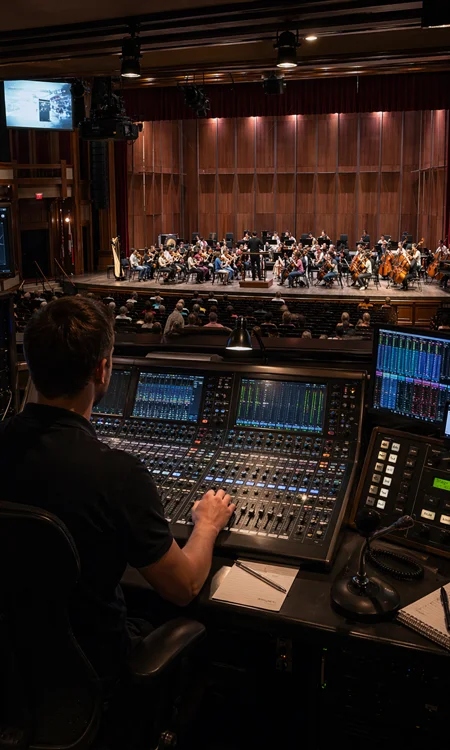
Audio reinforcement was engineered for consistent intelligibility across the seating area, minimizing the need for ongoing adjustment. Intercom systems were implemented to provide clear, uninterrupted communication between front-of-house and backstage positions. Control systems were designed to centralize operation while maintaining logical separation of functions.
The result is a system where signal flow, communication, and control are aligned, reducing ambiguity during live operation.
Systems and Components:
- Distributed theatrical audio system
- Intercom communication network
- Centralized control interface
- FOH control integration
Key Systems Integrated into the Theater Environment
Audio System
Designed for consistent speech intelligibility and tonal balance across the entire seating area without requiring frequent recalibration
Intercom System
Provides direct communication between technical roles, improving coordination during rehearsals and live events.
Control Systems
Centralized interfaces that simplify system operation while maintaining access to essential functions.
Control Booth Infrastructure
Unified front-of-house position integrating audio control, communication, and monitoring.
OPERATIONAL IMPACT
Consistent Performance with Reduced Setup Complexity
The integrated system allows the venue to transition between different types of events without extensive adjustments. Operators can rely on predictable system behavior, which reduces setup time and minimizes errors during live productions.
Improved communication between technical positions supports more efficient coordination, while simplified control interfaces make the system accessible to a wider range of users.
The result is a more stable workflow that supports both academic and professional production requirements.
OUTCOME
A Reliable Technical Foundation for Ongoing Use
Ruby Diamond Theater now operates with a system that emphasizes consistency and clarity. Audio performance remains stable across events, communication between teams is reliable, and control systems are straightforward to use.
The venue is equipped to support a wide range of productions without introducing variability in system performance, providing a dependable environment for both technical staff and performers.
Systems Designed for Predictable Performance
Pro AVL delivers integrated AV solutions for performance venues where reliability and operational clarity are critical.
From design through implementation, we focus on building systems that perform consistently across changing conditions.
If you are planning a new venue or upgrading an existing space, we can help create a technical foundation that supports long-term performance.
Start Your Project
Explore More Projects