
INSIGHTS
The Most Valuable Data Network in a Venue Might Be the Lighting System
Lighting Systems Are Collecting More Information Than Most People Realize
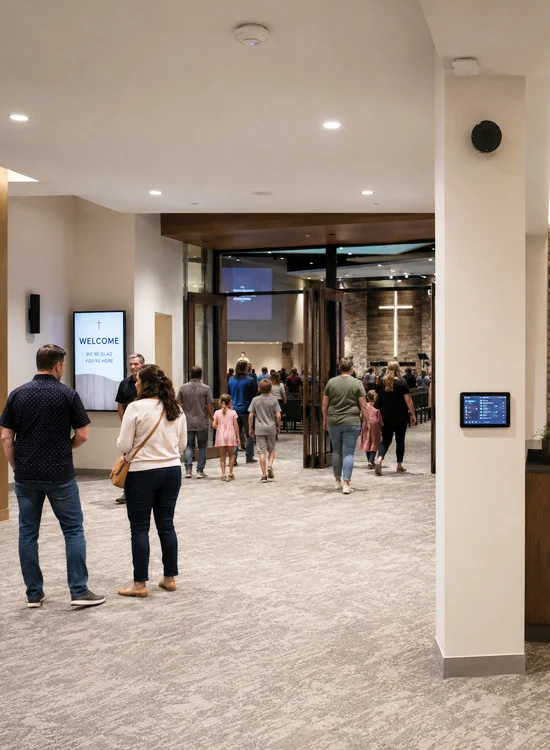
Walk through a newer venue, campus, or corporate facility and there is a good chance the lighting system already knows which spaces are occupied, how long people stay there, how daylight conditions are changing, and when rooms transition between operating modes.
Most occupants never notice it happening.
Lighting infrastructure has quietly evolved into one of the most distributed technology layers inside modern buildings because it already exists nearly everywhere people gather. Fixtures, sensors, control processors, and networked lighting devices now generate a constant stream of environmental and occupancy-related information that facilities can use to automate decisions and better understand how spaces perform over time.
That shift is starting to change how lighting systems are designed, integrated, and valued within commercial environments.
The Sensor Network Already Exists
One reason intelligent lighting systems are advancing so quickly is that the physical infrastructure is already in place.
Lighting networks naturally extend across offices, concourses, classrooms, hospitality spaces, meeting rooms, lobbies, corridors, and public gathering areas. As sensor capabilities expand, those same systems can collect occupancy data, monitor environmental conditions, trigger automation workflows, and communicate with other building technologies without requiring entirely separate infrastructure deployments.
For facilities teams, that creates opportunities well beyond energy management.
Lighting systems are ever-expanding contributions:
- Occupancy analytics and space utilization reporting
- Automated room and environmental controls
- Traffic flow visibility in public spaces
- Daylight harvesting and adaptive lighting behavior
- AV automation and room activation workflows
- Building-wide operational monitoring
What matters is not the fixture itself. It is the amount of usable operational information flowing through the network behind it.
Facilities Want Better Visibility Into How Buildings Actually Operate
A growing number of organizations are trying to answer operational questions that were historically difficult to measure accurately.
Which meeting rooms remain underused throughout the week? Which collaboration spaces experience the highest occupancy rates? When do common areas become congested? How much energy is consumed after active operating hours? Which event environments require the most technical support resources?
Lighting systems are becoming one of the easiest ways to gather that information because they already interact directly with physical occupancy across the building.
In many environments, the conversation around intelligent lighting is starting to sound less like a facilities discussion and more like a data conversation. Universities, corporate campuses, entertainment venues, and hospitality environments increasingly want centralized visibility into how people move through and interact with their spaces.
That operational insight has long-term value far beyond lighting control alone.
Automation Is Expanding Beyond Convenience
There was a time when automation in lighting systems mostly meant scheduled on-and-off events or basic dimming presets. Current expectations are far more dynamic.
A divisible event space may automatically reconfigure lighting, AV routing, and environmental controls when room partitions move. Conference spaces can activate operational presets based on scheduling platform activity. Hospitality environments may adjust lighting behavior according to occupancy density, time of day, or traffic movement patterns throughout the property.
The underlying expectation is responsiveness.
Building owners increasingly want spaces that adapt automatically to operational conditions instead of relying on constant manual intervention from staff. As those expectations grow, lighting systems become more deeply connected to AV control platforms, occupancy sensors, building management systems, and IT-managed infrastructure.
The projects performing best operationally are usually the ones where those systems were coordinated early rather than layered together later.

SCALABILITY
Lighting Infrastructure Influences Technology Strategy
This shift is also changing the role lighting infrastructure plays during project planning.
Network architecture, data transport, API compatibility, cybersecurity, and interoperability now affect lighting conversations in ways that barely existed a decade ago. In some projects, discussions involving lighting controls now overlap directly with enterprise IT standards and cloud-managed operational platforms.
That changes the expectations placed on integrators as well.
Clients are increasingly looking for partners who understand how lighting systems affect automation strategy, operational analytics, room intelligence, and long-term infrastructure scalability across entire facilities. The conversation is becoming less about isolated subsystems and more about how information moves throughout the building as a whole.
Lighting just happens to already occupy nearly every square foot of it.
Perspective
Lighting systems are evolving into infrastructure layers that help buildings interpret activity, automate workflows, and generate operational insight continuously throughout the day.
That evolution is expanding the role lighting plays across commercial environments, entertainment spaces, campuses, and public venues. The systems now influencing facility performance are not simply delivering illumination. They are participating directly in how buildings respond, adapt, and operate.
At Pro AVL, lighting infrastructure is approached as part of a broader connected ecosystem where AV, controls, networking, automation, and operational intelligence increasingly converge into a unified platform.
Start Your Project
Explore More Insights