
L&N Federal Credit Union Stadium (formerly Papa John's Stadium)
A single-array stadium sound system engineered to carry clarity from the lower bowl to the upper seats.
Location: Louisville, Kentucky
Market: Sports Venues
Solutions: Audio
Year: 2014
Primary Technologies: Meyer LEO, Meyer MICA, subwoofers
A Stadium Audio Upgrade Built Around Coverage Discipline
Papa John’s Cardinal Stadium needed a sound system capable of serving a large college football environment without treating the seating bowl as one simple listening area. Fans close to the scoreboard, spectators across the field, and upper-level seats all required intelligible announcements, strong game-day playback, and a consistent sense of connection to the event.
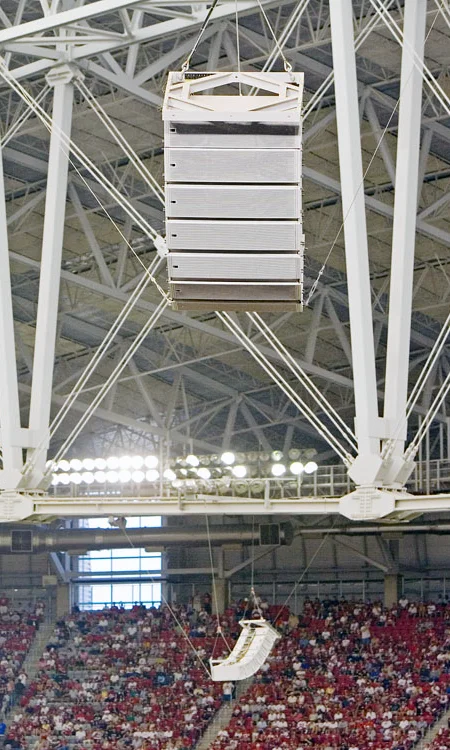
Pro AVL’s work centered on an innovative single-array stadium sound system that brought long-throw and short-throw loudspeaker elements together within one integrated structure. The approach supported broad coverage from a concentrated audio position, reducing the need for a scattered system layout while still addressing the very different distances inside the venue.
The result was a stadium audio system with a clear purpose: deliver powerful Meyer Sound performance in a way that helped the venue maintain energy, intelligibility, and operational control across the bowl.
One Array, Many Listening Distances
A college football stadium asks a loudspeaker system to reach seats that are close, high, distant, and acoustically exposed.
The project called for more than a loud system. Stadium audio has to stay understandable while competing with open-air conditions, crowd noise, architectural reflections, and the physical distance between the source and the farthest seats. A system that feels strong near the array can quickly lose definition across the field if coverage is not managed carefully.
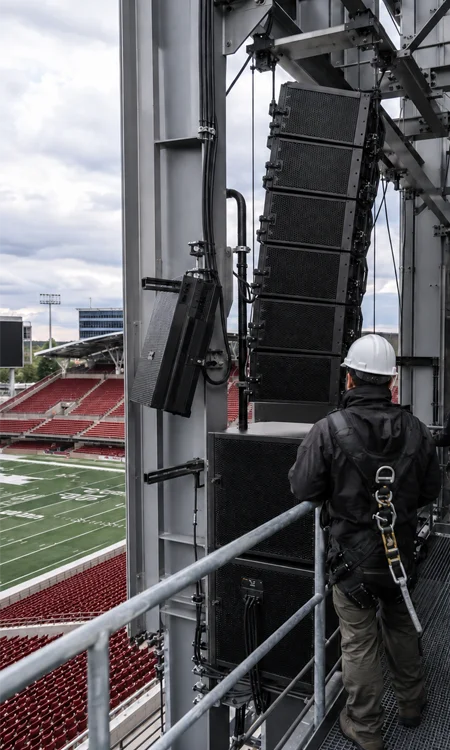
Pro AVL’s solution used a hybrid array concept that combined Meyer LEO, Meyer MICA, and subwoofer elements within a single structure. Long-throw components addressed distant seating areas, while short-throw elements supported closer bowl coverage. That combination gave the system a practical way to serve the whole venue from one disciplined loudspeaker position.
The value of the approach was in control. Instead of relying only on brute force, the system strategy focused on directing the right energy to the right parts of the seating bowl.
CHALLENGE
Making Distance Feel Less Like Distance
Large stadiums create a difficult audio problem because every seating section experiences the system differently. Lower-bowl listeners may sit close enough to receive immediate, high-impact sound. Upper seating areas may need projection over a much longer throw. Areas at intermediate distances can fall into transition zones where clarity depends on careful loudspeaker selection, aiming, and system tuning.
For this project, the challenge was to maintain consistent clarity and intelligibility across those varied distances while keeping the main system within a single integrated structure. That required a design that could balance power, pattern control, low-frequency support, and coverage shape.
- Near seating needed controlled short-throw coverage that would not overpower the closest sections.
- Upper and far seating required long-throw performance that could hold intelligibility at distance.
- The system needed low-frequency support strong enough for game-day energy without muddying spoken content.
- The final design had to work as a unified stadium audio system, not as disconnected zones fighting for attention.
DESIGN AND INTEGRATION APPROACH
A Hybrid Loudspeaker Strategy for a Complex Bowl
The system brought together complementary Meyer loudspeaker technologies so each part of the seating bowl could be addressed with intention.
The design paired large-format long-throw capability with shorter-range elements inside one concentrated array location. Meyer LEO provided the projection needed for farther seating areas. Meyer MICA and subwoofer elements helped shape coverage and impact for closer and supporting areas of the bowl.
That mix gave the system a practical range of tools within a single structure. Instead of asking one loudspeaker type to solve every distance, the array could use different elements for different coverage responsibilities while still behaving as one coordinated system.
Integration also mattered at the structural level. A stadium loudspeaker system has to be installed where it can work acoustically, survive the environment, remain serviceable, and fit the building’s sightlines and architecture. The final result needed to feel like part of the venue’s operating infrastructure, not an add-on hanging in the wrong place.
Systems Elements
The project sheet identifies a Meyer-based system built around long-throw, short-throw, and low-frequency reinforcement elements.
Meyer LEO
Large-format loudspeaker technology provided the reach needed for seating areas farther from the main array. Its role was central to maintaining projection across the stadium bowl.
Meyer MICA
MICA elements supported the system’s hybrid coverage strategy, helping address seating areas where controlled shorter-range performance was needed alongside the long-throw system.
Subwoofers
Low-frequency reinforcement added weight and energy for game-day playback while supporting the overall impact of the stadium experience.
Single-structure array approach
The system combined multiple loudspeaker responsibilities within one integrated array location, keeping the design focused and reducing the visual and operational complexity of a more distributed layout.
OPERATIONAL IMPACT
Clearer Game-Day Communication Across the Bowl
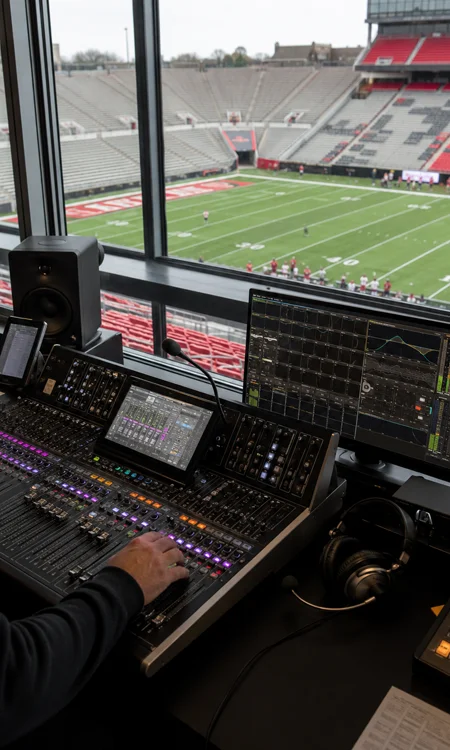
For a stadium operations team, audio performance is not only about volume. Announcements, music, prompts, sponsorship moments, emergency messaging, and in-game production all depend on a system that behaves predictably. When coverage is uneven, operators have to compensate. When intelligibility drops, the venue loses control of the message.
The single-array strategy gave the stadium a clearer foundation for everyday operation. With long-throw and short-throw coverage working together, the system could support a more consistent listening experience across seating areas that would otherwise place very different demands on the audio system.
That consistency matters during the moments fans notice and the moments they do not. Player introductions, crowd prompts, public address announcements, and transitions between game segments all benefit from a system that can deliver energy without sacrificing definition.
OUTCOME
A Focused Audio System for a High-Energy Stadium
The project gave the venue a stadium sound system built around a specific engineering idea: use one integrated array structure to serve a wide range of seating distances with clarity and control.
By combining Meyer LEO, MICA, and subwoofer technology, the system addressed both reach and impact. It supported the scale of a college football environment while keeping the audio approach organized around intelligibility, coverage, and operational usefulness.
For Pro AVL, the project reflects the kind of work that matters in sports venues: understanding the room, respecting the sightlines, choosing the right tools for the coverage problem, and delivering a system that supports the event without calling attention to itself for the wrong reasons.
Stadium Audio Systems That Work From Every Seat
Pro AVL helps teams, universities, and venue operators plan and integrate sound systems that match the scale of the building and the realities of live event operation.
Start Your Project
Explore More Projects